
商品の情報、ストアのお知らせをお伝えしていきます。
日報
2025.6.16 MON.
2025.6.16 MON.
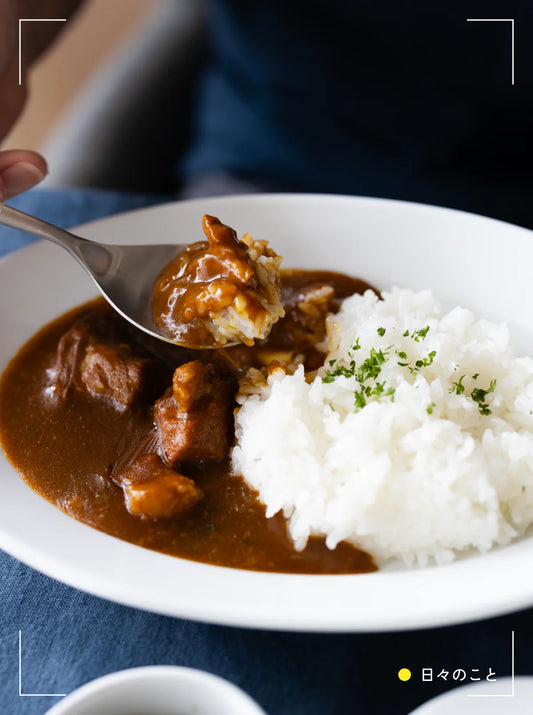
When I think of my mom's home cooking, it's curry.
There might be other dishes, but curry is the first thing that comes to mind.
I just gave it a little thought, but nothing else came to mind besides curry.
"How rude! I made all sorts of things!"
I can almost hear her scolding me.
The characteristics of our family's curry were like this:
・Chicken thighs
・Vegetables are carrots, onions, and potatoes
・Sprinkle curry powder on the meat when searing it
・Mix two types of store-bought curry roux
・A lot of liquid
The effect of my mom's home cooking is amazing.
Even now, I make curry once a month, but it's almost the exact same process.
The only differences are that I now chop the vegetables finely and sometimes switch the meat to ground meat.
Even though I occasionally try various recipes on a whim, it's strange how I always end up coming back to the original.
It's also strange how, even when I eat curry out, I still think the curry I made myself is the most delicious.
Is this, by now, my mom's curse?
"How rude! Just say it's delicious!"
I can almost hear her scolding me.
When I think of my mom's home cooking, it's curry.
There might be other dishes, but curry is the first thing that comes to mind.
I just gave it a little thought, but nothing else came to mind besides curry.
"How rude! I made all sorts of things!"
I can almost hear her scolding me.
The characteristics of our family's curry were like this:
・Chicken thighs
・Vegetables are carrots, onions, and potatoes
・Sprinkle curry powder on the meat when searing it
・Mix two types of store-bought curry roux
・A lot of liquid
The effect of my mom's home cooking is amazing.
Even now, I make curry once a month, but it's almost the exact same process.
The only differences are that I now chop the vegetables finely and sometimes switch the meat to ground meat.
Even though I occasionally try various recipes on a whim, it's strange how I always end up coming back to the original.
It's also strange how, even when I eat curry out, I still think the curry I made myself is the most delicious.
Is this, by now, my mom's curse?
"How rude! Just say it's delicious!"
I can almost hear her scolding me.
2025.6.13 FRI.
2025.6.13 FRI.
I want to emphasize the importance of things being "just right."
The seasoning is neither too light nor too strong, it's just right.
The presentation is neither too flashy nor too plain, it's just right.
The tableware has a presence that isn't too assertive, it's just right.
I believe that things that are "just right" are the ones that you never tire of and that last the longest.
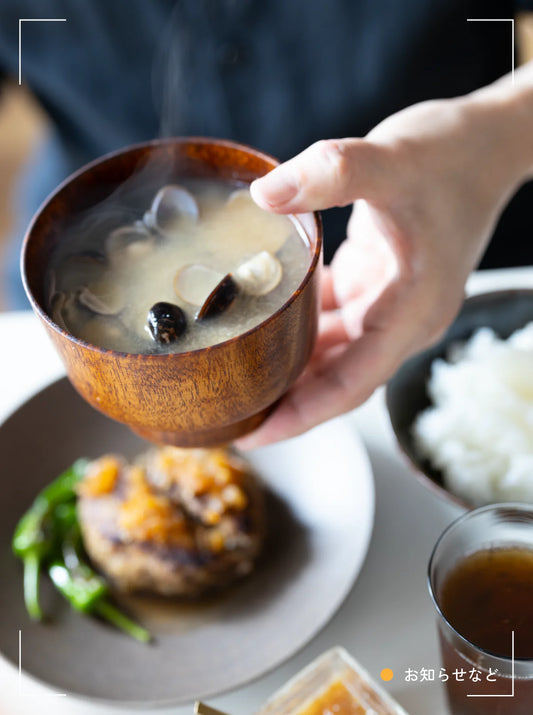
The "Rokurosha Soup Bowl with Wiped Lacquer Finish," which we have just started selling, is truly a "just right" piece of tableware.
Rice bowls and miso soup bowls are items used every day, for every meal.
However, they're not something you imagine having many of.
I think many households have their own personal ones.
Not too flashy, but still something you love.
As such a "just right" piece of tableware, I highly recommend Rokurosha's soup bowl.
Please see the product page for details.
I want to emphasize the importance of things being "just right."
The seasoning is neither too light nor too strong, it's just right.
The presentation is neither too flashy nor too plain, it's just right.
The tableware has a presence that isn't too assertive, it's just right.
I believe that things that are "just right" are the ones that you never tire of and that last the longest.
The "Rokurosha Soup Bowl with Wiped Lacquer Finish," which we have just started selling, is truly a "just right" piece of tableware.
Rice bowls and miso soup bowls are items used every day, for every meal.
However, they're not something you imagine having many of.
I think many households have their own personal ones.
Not too flashy, but still something you love.
As such a "just right" piece of tableware, I highly recommend Rokurosha's soup bowl.
Please see the product page for details.
THU. 2025.6.12
THU. 2025.6.12
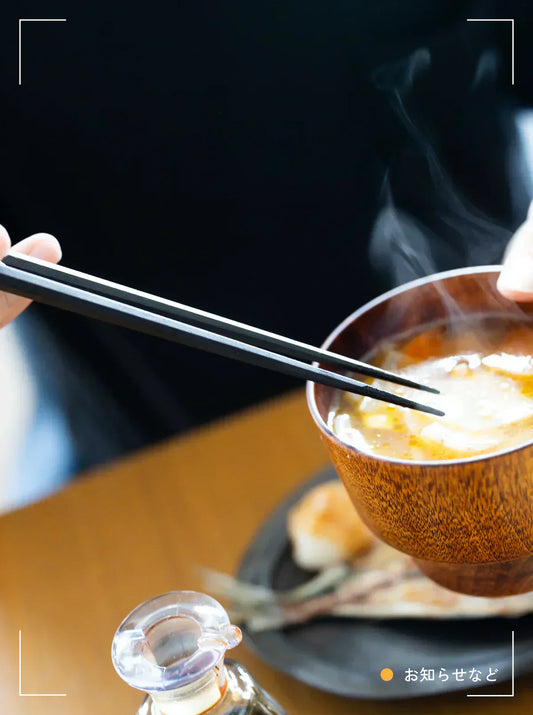
Chopsticks are an amazing utensil, I think.
I've been using them naturally since I was a child, so I never really appreciated how great they are, but thinking about it again, they're a very convenient tool.
When I'm at an Italian restaurant, eating a salad, and struggling to pick up those last little leaves with a fork, I always think how easy it would be with chopsticks.
I used to often think how much easier it would be to eat hamburgers and steaks if I had chopsticks. It's easier to grip meat with chopsticks than with a fork.
When I make pasta at home, if there's not much sauce, I sometimes eat it with chopsticks. However, presentation is also important, so I try to use a fork and spoon as much as possible for Western dishes.
You might think chopsticks are good for everything, but I don't feel like eating French fries, which come as a side with hamburgers, with chopsticks, so I eat them with a fork. I wonder why.
Soon, kikkake will be selling easy-to-use, recommended chopsticks.
Chopsticks are an amazing utensil, I think.
I've been using them naturally since I was a child, so I never really appreciated how great they are, but thinking about it again, they're a very convenient tool.
When I'm at an Italian restaurant, eating a salad, and struggling to pick up those last little leaves with a fork, I always think how easy it would be with chopsticks.
I used to often think how much easier it would be to eat hamburgers and steaks if I had chopsticks. It's easier to grip meat with chopsticks than with a fork.
When I make pasta at home, if there's not much sauce, I sometimes eat it with chopsticks. However, presentation is also important, so I try to use a fork and spoon as much as possible for Western dishes.
You might think chopsticks are good for everything, but I don't feel like eating French fries, which come as a side with hamburgers, with chopsticks, so I eat them with a fork. I wonder why.
Soon, kikkake will be selling easy-to-use, recommended chopsticks.
Wed, June 11, 2025
Wed, June 11, 2025
My encounter with karasumi pasta was sudden.
When I was a university student, a pasta shop opened next to the karaoke place where I was working part-time.
Back then, there weren't many pasta shops, so my co-workers and I were excited that a pasta shop had finally opened in our town.
When the pasta shop finally opened, I went in alone. I had already decided what I was going to eat. It was the spaghetti made with squid ink, which supposedly turns your mouth completely black when you eat it.
Since there were no pictures on the menu, I ordered just by reading the words. "Karasumi pasta, please."
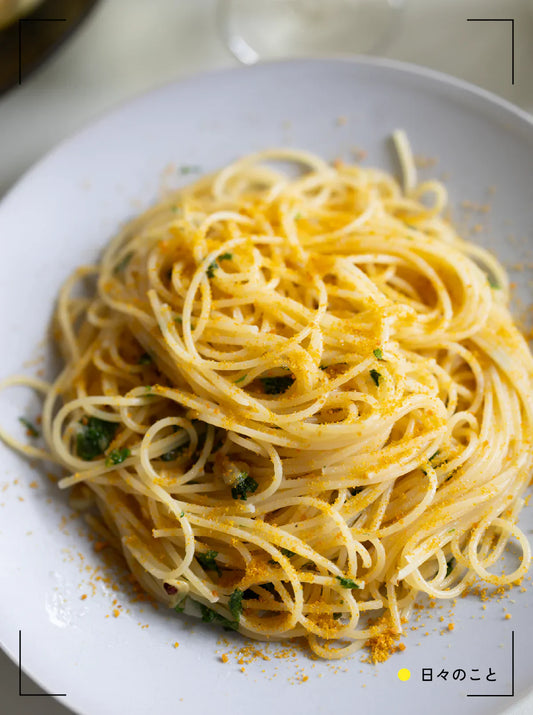
The pasta that came out was oil-based with golden powder sprinkled on top. The first thing I thought was, "Huh. It's not black."
"So there's squid ink pasta that isn't black," I thought as I ate it, and it was incredibly delicious. The golden powder pasta had a rich, salty flavor I'd never tasted before, and it was even more delicious than I'd imagined. "Ah, squid ink pasta is so good!" I was completely smitten.
It was only a little later that I learned it was karasumi pasta.
My encounter with karasumi pasta was sudden.
When I was a university student, a pasta shop opened next to the karaoke place where I was working part-time.
Back then, there weren't many pasta shops, so my co-workers and I were excited that a pasta shop had finally opened in our town.
When the pasta shop finally opened, I went in alone. I had already decided what I was going to eat. It was the spaghetti made with squid ink, which supposedly turns your mouth completely black when you eat it.
Since there were no pictures on the menu, I ordered just by reading the words. "Karasumi pasta, please."
The pasta that came out was oil-based with golden powder sprinkled on top. The first thing I thought was, "Huh. It's not black."
"So there's squid ink pasta that isn't black," I thought as I ate it, and it was incredibly delicious. The golden powder pasta had a rich, salty flavor I'd never tasted before, and it was even more delicious than I'd imagined. "Ah, squid ink pasta is so good!" I was completely smitten.
It was only a little later that I learned it was karasumi pasta.
TUE, 10 June 2025
TUE, 10 June 2025
I finally did what I always thought I'd do someday.
I cooked rice directly in the water it had been soaking in.
I don't like to increase my washing up, so I always soak the rice in the rice cooker pot and then change the water when I cook it. There's no need to measure the water during soaking, so I just put in enough to cover the rice. Since that's clearly less than the amount of water needed for cooking, I think I cooked it with a lot less water than necessary.
If I soaked it in a bowl, I'd notice when changing the water, so this mistake probably wouldn't happen. However, I don't want more washing up, and I generally don't make such mistakes, so I thought soaking in the rice cooker pot was the best option. I just cooked it like that.
The cooked rice was visibly lacking in moisture. When I opened the lid, I saw dry, lusterless grains instead of shiny ones, and I didn't understand what had happened. I felt like I heard the rice grains saying, "W-water..."
The moment I saw it, I wondered if the rice was bad, if the rice cooker was broken, or if the gas flame was off. After blaming everything but myself, I finally realized my mistake: "Oh, I don't remember anything after soaking... Did I just cook it like that?"
Konegi, who was in charge of filming, kindly said, "This is just the right firmness for making fried rice." Even though there were no plans to make fried rice, his gentle words, spoken to lighten the mood, pierced my heart. I'm sorry.
By the way, as for how it tasted, it was dry but not inedible, and I ate it all. However, rice cooked normally is definitely much tastier.
That's how it was.
I won't make this mistake again, so I'll continue to soak the rice in the rice cooker pot.
I finally did what I always thought I'd do someday.
I cooked rice directly in the water it had been soaking in.
I don't like to increase my washing up, so I always soak the rice in the rice cooker pot and then change the water when I cook it. There's no need to measure the water during soaking, so I just put in enough to cover the rice. Since that's clearly less than the amount of water needed for cooking, I think I cooked it with a lot less water than necessary.
If I soaked it in a bowl, I'd notice when changing the water, so this mistake probably wouldn't happen. However, I don't want more washing up, and I generally don't make such mistakes, so I thought soaking in the rice cooker pot was the best option. I just cooked it like that.
The cooked rice was visibly lacking in moisture. When I opened the lid, I saw dry, lusterless grains instead of shiny ones, and I didn't understand what had happened. I felt like I heard the rice grains saying, "W-water..."
The moment I saw it, I wondered if the rice was bad, if the rice cooker was broken, or if the gas flame was off. After blaming everything but myself, I finally realized my mistake: "Oh, I don't remember anything after soaking... Did I just cook it like that?"
Konegi, who was in charge of filming, kindly said, "This is just the right firmness for making fried rice." Even though there were no plans to make fried rice, his gentle words, spoken to lighten the mood, pierced my heart. I'm sorry.
By the way, as for how it tasted, it was dry but not inedible, and I ate it all. However, rice cooked normally is definitely much tastier.
That's how it was.
I won't make this mistake again, so I'll continue to soak the rice in the rice cooker pot.
Mon, Jun 9, 2025
Mon, Jun 9, 2025
The dish I make most often is definitely pasta. I'd say I make pasta for lunch at least once every three days.
Tomato-based, oil-based, Japanese-style, cream-based—the flavor doesn't matter, but the noodle type is always spaghetti. The typical long, thin kind. I particularly like it a bit on the thinner side.
After trying various pasta-making techniques, I've realized again that the key to making delicious pasta is "adding salt to the boiling water."
In the past, I felt it was a waste to add a lot of salt to the boiling water, and I thought I couldn't get the flavor right with the sauce, so I'd put salt in the sauce instead of the water. But then the flavor often didn't quite come together, or it ended up being blander than I intended.
I feel that adding salt to the pot from the beginning gives the noodles a base seasoning, creates a more consistent flavor, and most importantly, solidifies the taste.
Recently, I ran out of salt, and while there wasn't enough to put in the pot, there was enough for the sauce. When I did that, the flavor didn't quite come together, and I truly felt again how important it is to add salt to the boiling water.
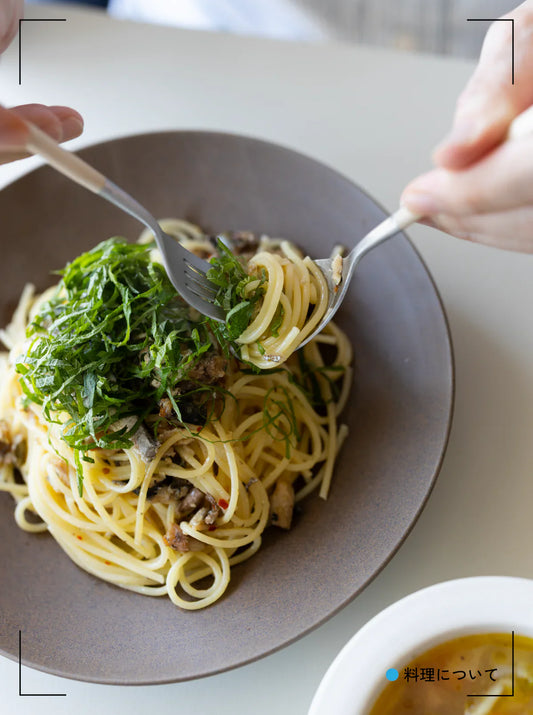
My current obsession is pasta with shiso and oil sardines.
The dish I make most often is definitely pasta. I'd say I make pasta for lunch at least once every three days.
Tomato-based, oil-based, Japanese-style, cream-based—the flavor doesn't matter, but the noodle type is always spaghetti. The typical long, thin kind. I particularly like it a bit on the thinner side.
After trying various pasta-making techniques, I've realized again that the key to making delicious pasta is "adding salt to the boiling water."
In the past, I felt it was a waste to add a lot of salt to the boiling water, and I thought I couldn't get the flavor right with the sauce, so I'd put salt in the sauce instead of the water. But then the flavor often didn't quite come together, or it ended up being blander than I intended.
I feel that adding salt to the pot from the beginning gives the noodles a base seasoning, creates a more consistent flavor, and most importantly, solidifies the taste.
Recently, I ran out of salt, and while there wasn't enough to put in the pot, there was enough for the sauce. When I did that, the flavor didn't quite come together, and I truly felt again how important it is to add salt to the boiling water.
My current obsession is pasta with shiso and oil sardines.