
商品の情報、ストアのお知らせをお伝えしていきます。
日報
FRI, June 6, 2025
FRI, June 6, 2025
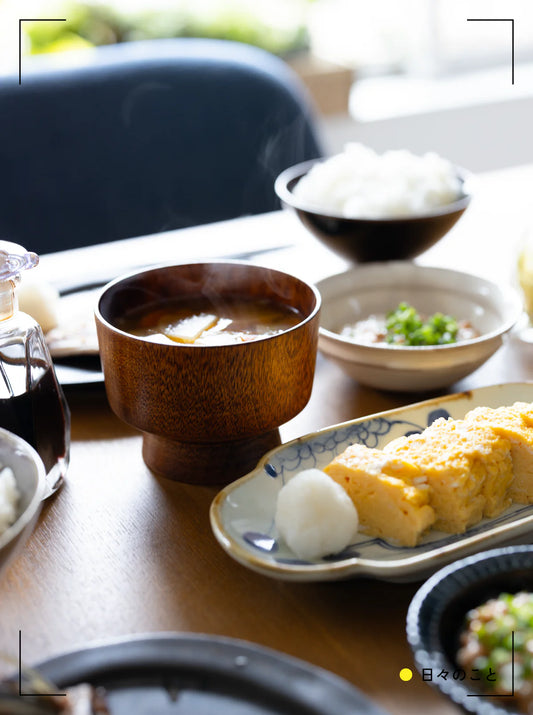
This is a story from when I was in elementary school.
My family home was right next to the elementary school. To be precise, it was just across the road. I once counted how many steps it took to get to school, and I think it was 17 steps. I bet it would be about 14 steps now.
Even though it was close, it doesn't mean I was never late. There were a few times when our entire family woke up to the elementary school chime. I don't think many people have the experience of waking up to the starting chime, but it's quite a rush.
At those times, we were all scrambling to get ready, and I remember something my mom said then: "It's okay to be late, but eat your breakfast."
As a child, I thought, "Oh, so that's how it is."
Even now, that feeling remains, and it's ingrained in my mind that eating a meal is a high priority.
Since I can no longer ask my mother, I don't know how seriously she meant it, but it's a saying I take to heart and really like.
"It's okay to be late, but eat your breakfast."
This is a story from when I was in elementary school.
My family home was right next to the elementary school. To be precise, it was just across the road. I once counted how many steps it took to get to school, and I think it was 17 steps. I bet it would be about 14 steps now.
Even though it was close, it doesn't mean I was never late. There were a few times when our entire family woke up to the elementary school chime. I don't think many people have the experience of waking up to the starting chime, but it's quite a rush.
At those times, we were all scrambling to get ready, and I remember something my mom said then: "It's okay to be late, but eat your breakfast."
As a child, I thought, "Oh, so that's how it is."
Even now, that feeling remains, and it's ingrained in my mind that eating a meal is a high priority.
Since I can no longer ask my mother, I don't know how seriously she meant it, but it's a saying I take to heart and really like.
"It's okay to be late, but eat your breakfast."
THU. 2025.6.5
THU. 2025.6.5
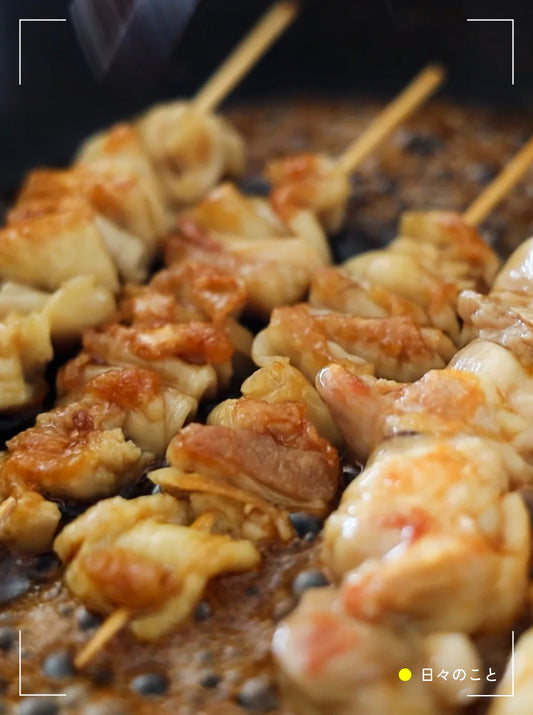
"Please eat yakitori without removing the skewers." I once saw a yakitori restaurant owner say this somewhere. They said that since the yakitori is carefully skewered, and sometimes the flavor varies between the top and bottom of the skewer, they want people to eat it properly from top to bottom.
I thought, "I see," but there are times when it's more convenient to remove the skewer, so I've always taken it off when I wanted to.
Today, I skewered yakitori for the first time in a while. I skewered a lot more carefully than usual, and I think I finally understood how yakitori restaurant owners feel.
Skewering is really hard work! First of all, it's more difficult than I thought. If you just stick it on, it becomes limp, and even when I thought I did it properly, it still looked different from what yakitori restaurants make.
The preparation also varies by part, involving blanching and trimming unnecessary bits, which took much longer than I expected.
This made me feel, "Since I went to all this trouble to make it, I want you to eat it right off the skewer!" I didn't vary the flavor between the top and bottom of the skewer, but I still want you to eat it right off the skewer! Yakitori restaurant owners, I'm sorry for my past behavior. From now on, I will definitely eat it right off the skewer.
"Please eat yakitori without removing the skewers." I once saw a yakitori restaurant owner say this somewhere. They said that since the yakitori is carefully skewered, and sometimes the flavor varies between the top and bottom of the skewer, they want people to eat it properly from top to bottom.
I thought, "I see," but there are times when it's more convenient to remove the skewer, so I've always taken it off when I wanted to.
Today, I skewered yakitori for the first time in a while. I skewered a lot more carefully than usual, and I think I finally understood how yakitori restaurant owners feel.
Skewering is really hard work! First of all, it's more difficult than I thought. If you just stick it on, it becomes limp, and even when I thought I did it properly, it still looked different from what yakitori restaurants make.
The preparation also varies by part, involving blanching and trimming unnecessary bits, which took much longer than I expected.
This made me feel, "Since I went to all this trouble to make it, I want you to eat it right off the skewer!" I didn't vary the flavor between the top and bottom of the skewer, but I still want you to eat it right off the skewer! Yakitori restaurant owners, I'm sorry for my past behavior. From now on, I will definitely eat it right off the skewer.
WED. June 4, 2025
WED. June 4, 2025
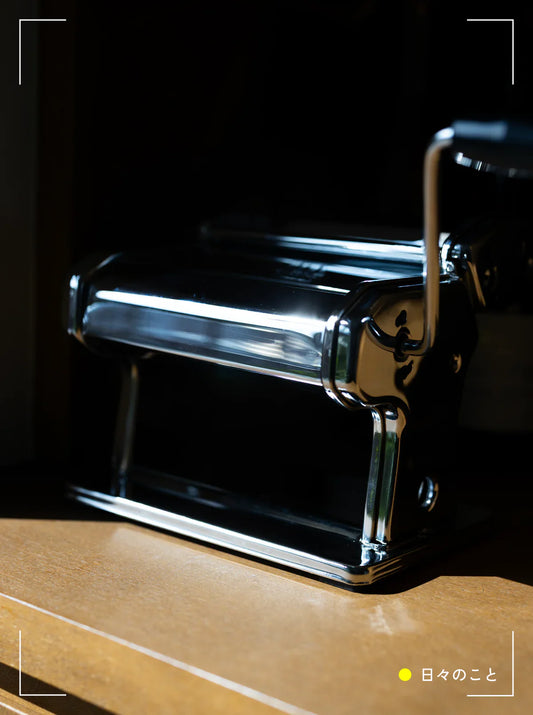
My former senior colleague gave me a pasta maker.
I once went to their house to make homemade ramen. At the time, I bought and brought a super cheap pasta maker, but as soon as I started kneading the ramen dough and was about to make the noodles, the machine fell apart. I ended up cutting the noodles with a knife, which is a bitter memory.
Maybe trying to make ramen with a pasta maker in the first place was a mistake, but perhaps remembering that incident, they gave it to me as a gift for my new venture.
I usually don't buy these kinds of tools myself, but since I received it as a gift, it makes me want to try it out, so I'm very happy.
Pasta, ravioli, ramen, udon... what should I make first? Thank you, Sugano-san!
My former senior colleague gave me a pasta maker.
I once went to their house to make homemade ramen. At the time, I bought and brought a super cheap pasta maker, but as soon as I started kneading the ramen dough and was about to make the noodles, the machine fell apart. I ended up cutting the noodles with a knife, which is a bitter memory.
Maybe trying to make ramen with a pasta maker in the first place was a mistake, but perhaps remembering that incident, they gave it to me as a gift for my new venture.
I usually don't buy these kinds of tools myself, but since I received it as a gift, it makes me want to try it out, so I'm very happy.
Pasta, ravioli, ramen, udon... what should I make first? Thank you, Sugano-san!
2025.6.3 TUE.
2025.6.3 TUE.
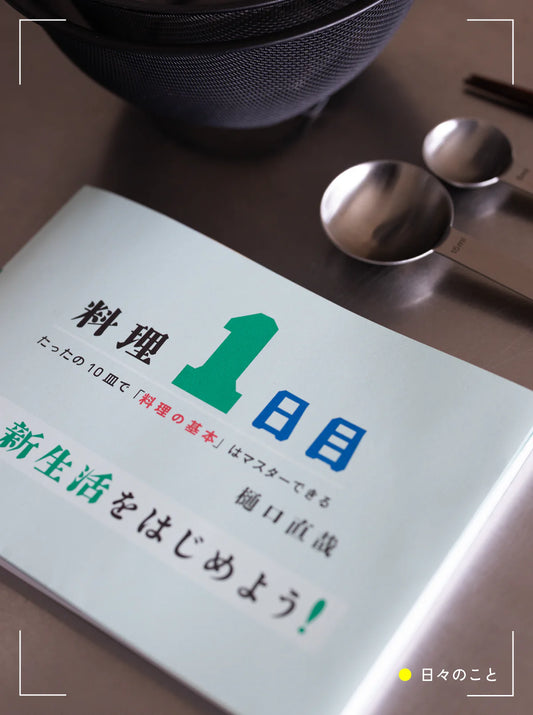
When I cook, I often refer to cookbooks, recipe websites, and YouTube, and among them, I frequently watch Naoya Higuchi's YouTube channel.
Rather than typical recipe explanations, his videos delve into single cooking tools or single seasonings, like "How to choose a frying pan," "What is salt?", or "What is olive oil?", explaining them in detail, including their underlying principles.
This person is quite logical. For example, he might say, "Olive oil contains a lot of oleic acid, which is a monounsaturated fatty acid, so it's less prone to oxidation. That's why it's suitable for raw consumption." He teaches principles I've never known before, which is educational and enjoyable to listen to. It helps me understand cooking from a deeper level, making me realize, "Oh, so that's why we do things this way." So, I highly recommend his channel.
He recently released a book, and it arrived at my home today, so I'm looking forward to reading it.
When I cook, I often refer to cookbooks, recipe websites, and YouTube, and among them, I frequently watch Naoya Higuchi's YouTube channel.
Rather than typical recipe explanations, his videos delve into single cooking tools or single seasonings, like "How to choose a frying pan," "What is salt?", or "What is olive oil?", explaining them in detail, including their underlying principles.
This person is quite logical. For example, he might say, "Olive oil contains a lot of oleic acid, which is a monounsaturated fatty acid, so it's less prone to oxidation. That's why it's suitable for raw consumption." He teaches principles I've never known before, which is educational and enjoyable to listen to. It helps me understand cooking from a deeper level, making me realize, "Oh, so that's why we do things this way." So, I highly recommend his channel.
He recently released a book, and it arrived at my home today, so I'm looking forward to reading it.
2025.6.2 MON.
2025.6.2 MON.
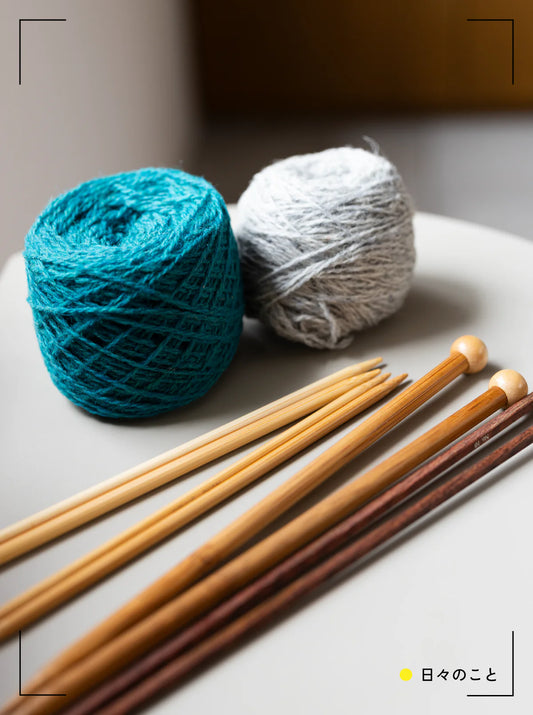
About 10 years ago, I used to knit a lot. I made scarves, gloves, and even sweaters, so I think I was pretty serious about it.
It's something you only realize once you try it, but if you knit exactly according to the pattern, it turns out perfectly. I thought it was something more artistic, but it's actually closer to building a model kit; it's quite linear, and I remember thinking at the time that it felt more like a task than I expected.
Also, I used to think that knitting didn't use the language part of my brain, since I could talk while knitting.
After that, I started cooking, and I have the opposite feeling compared to knitting. Before I started cooking seriously, I thought I could just follow a recipe and it would turn out fine.
Fundamentally, it should be a chemical reaction and thus theoretically manageable, but even when I followed recipes, I often burned things or couldn't make them taste good at first.
On the other hand, once I got used to it, I started making delicious food even when I just winged it, and stopped burning things. It's hard to put into words, but I feel like I'm getting better at it.
And I don't talk while I'm cooking. I'm busy cutting, frying, and plating multiple dishes simultaneously, so I don't have the mental space for it.
Knitting and cooking had similar images, but it's interesting how they turned out to be opposite once I tried them.
About 10 years ago, I used to knit a lot. I made scarves, gloves, and even sweaters, so I think I was pretty serious about it.
It's something you only realize once you try it, but if you knit exactly according to the pattern, it turns out perfectly. I thought it was something more artistic, but it's actually closer to building a model kit; it's quite linear, and I remember thinking at the time that it felt more like a task than I expected.
Also, I used to think that knitting didn't use the language part of my brain, since I could talk while knitting.
After that, I started cooking, and I have the opposite feeling compared to knitting. Before I started cooking seriously, I thought I could just follow a recipe and it would turn out fine.
Fundamentally, it should be a chemical reaction and thus theoretically manageable, but even when I followed recipes, I often burned things or couldn't make them taste good at first.
On the other hand, once I got used to it, I started making delicious food even when I just winged it, and stopped burning things. It's hard to put into words, but I feel like I'm getting better at it.
And I don't talk while I'm cooking. I'm busy cutting, frying, and plating multiple dishes simultaneously, so I don't have the mental space for it.
Knitting and cooking had similar images, but it's interesting how they turned out to be opposite once I tried them.
2025.5.30 FRI.
2025.5.30 FRI.
I watched a video about how "words influence human perception."
Apparently, there's a tribe in a certain region that only has three words for colors: "black, white, and red." It's said that these people have a weaker ability to distinguish colors.
In Japan, we express rainbows with seven colors, but apparently, some countries express them with three. I'm sure that for people in those regions, it genuinely looks like three colors. Up to this point, this was about "color perception."
Listening to this discussion about color perception, I thought the same could be said about the sense of taste, "gustatory perception."
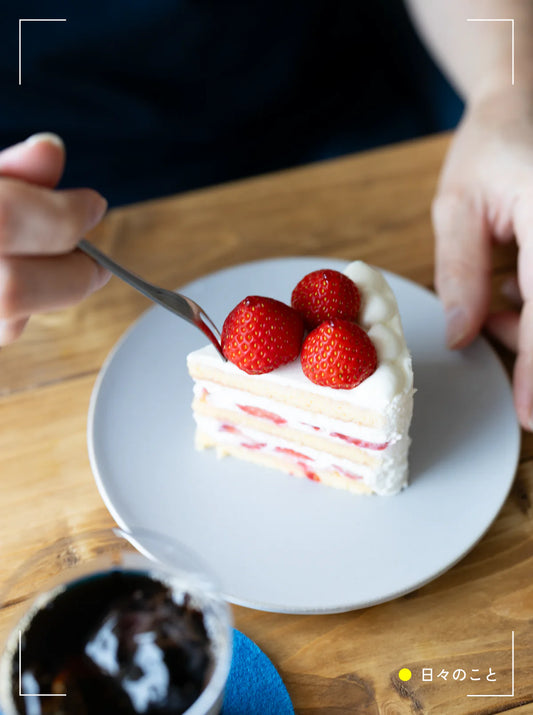
The "sweetness" of strawberries, the "sweetness" of cake, the "sweetness" of baked sweet potatoes—they're all supposed to be different kinds of sweetness. But because we use the same word "sweet" to describe them, it might be harder to recognize their differences.
It's a bit difficult to create new words to replace "sweet," but by slightly changing the expressions, like
"roundly sweet" for strawberries,
"strikingly sweet" for cake,
"richly sweet" for baked sweet potatoes,
I think the richness when eating or making things might increase. So, I'm thinking of giving it a try.
Sweet alcoholic beverages... hmm... maybe "smoothly sweet"?
I watched a video about how "words influence human perception."
Apparently, there's a tribe in a certain region that only has three words for colors: "black, white, and red." It's said that these people have a weaker ability to distinguish colors.
In Japan, we express rainbows with seven colors, but apparently, some countries express them with three. I'm sure that for people in those regions, it genuinely looks like three colors. Up to this point, this was about "color perception."
Listening to this discussion about color perception, I thought the same could be said about the sense of taste, "gustatory perception."
The "sweetness" of strawberries, the "sweetness" of cake, the "sweetness" of baked sweet potatoes—they're all supposed to be different kinds of sweetness. But because we use the same word "sweet" to describe them, it might be harder to recognize their differences.
It's a bit difficult to create new words to replace "sweet," but by slightly changing the expressions, like
"roundly sweet" for strawberries,
"strikingly sweet" for cake,
"richly sweet" for baked sweet potatoes,
I think the richness when eating or making things might increase. So, I'm thinking of giving it a try.
Sweet alcoholic beverages... hmm... maybe "smoothly sweet"?