
商品の情報、ストアのお知らせをお伝えしていきます。
日報
Wednesday, July 2 | YouTube Shoot
Wednesday, July 2 | YouTube Shoot
Every time we film for YouTube, it's a process of trial and error. What we think will definitely be a hit sometimes isn't, and what we're not so confident about sometimes gets a lot of views. Things rarely go as we expect.
Still, I film with Konagi, who's in charge of shooting, while thinking about where the intersection lies between what we can do and what everyone can enjoy.
The other day, we did a test shoot to challenge ourselves with a completely different atmosphere and filming method than before. Whether that challenge will ever see the light of day is still uncertain, but what I realized had an effect even before that was a change in how I looked at what we usually film.
Since we post on YouTube once a week, we film regularly every week. And when you're filming every week, even if you're not bored, there are times when you want to change the content a bit. How to solve that feeling of routine becomes a concern.
Amidst such concerns, today, when we did our usual filming, there was a subtly fresh atmosphere for some reason. It was the same filming as always, but it felt a little different. That was because we had done the challenge shoot the day before.
When you return to your usual routine after doing something completely different, the good points of the usual and what should be preserved become clearly visible. It might not have changed anything, but there was a feeling that something was different.
I felt that when you're doing something repeatedly and it's hard to notice things, trying something completely different or a different method makes it easier to look back at the basics. Although I didn't do the challenge shoot for that reason, I was happy with the unexpected discovery.
Every time we film for YouTube, it's a process of trial and error. What we think will definitely be a hit sometimes isn't, and what we're not so confident about sometimes gets a lot of views. Things rarely go as we expect.
Still, I film with Konagi, who's in charge of shooting, while thinking about where the intersection lies between what we can do and what everyone can enjoy.
The other day, we did a test shoot to challenge ourselves with a completely different atmosphere and filming method than before. Whether that challenge will ever see the light of day is still uncertain, but what I realized had an effect even before that was a change in how I looked at what we usually film.
Since we post on YouTube once a week, we film regularly every week. And when you're filming every week, even if you're not bored, there are times when you want to change the content a bit. How to solve that feeling of routine becomes a concern.
Amidst such concerns, today, when we did our usual filming, there was a subtly fresh atmosphere for some reason. It was the same filming as always, but it felt a little different. That was because we had done the challenge shoot the day before.
When you return to your usual routine after doing something completely different, the good points of the usual and what should be preserved become clearly visible. It might not have changed anything, but there was a feeling that something was different.
I felt that when you're doing something repeatedly and it's hard to notice things, trying something completely different or a different method makes it easier to look back at the basics. Although I didn't do the challenge shoot for that reason, I was happy with the unexpected discovery.
Tuesday, July 1st | Situation
Tuesday, July 1st | Situation
This past weekend, I went to a river for a barbecue.
We set up charcoal, grilled meat and vegetables, and made yakisoba on a hot plate – a pretty standard barbecue, all in all.
It’s strange how the meat and yakisoba always seem to taste a little better at a barbecue than they do normally.
I wonder why. Is it because of the charcoal fire? Charcoal grilling is said to make things taste better, so maybe that’s it. But then again, cooking meat in an unfamiliar environment, with different heat, and unfamiliar tools, all of which are irregular situations, is certainly difficult. So, I wonder if it really tastes better than usual.
Especially for dishes made on a hot plate, like yakisoba, it’s not cooked over direct charcoal flame, and yet controlling the heat is tricky. I’m sure I could consistently make higher quality yakisoba in a frying pan at home.
Still, it feels like barbecue tastes better.
I wonder why. It must be the atmosphere.
After traveling quite a distance from home to a barbecue site where the sound of the river could be heard, and then starting from lighting the charcoal, it takes about an hour until the meat is finally ready to grill. By the time the salt-grilled beef tongue is finally finished and eaten, of course it’s going to taste delicious.
I realized again that "delicious" isn't just about taste. It's the result of various situations: the plate, how hungry you are, the people you’re eating with, your physical condition, the effort put into preparation, the memories made, and so on.
I feel like the concept of "delicious" includes happiness and enjoyment.
This past weekend, I went to a river for a barbecue.
We set up charcoal, grilled meat and vegetables, and made yakisoba on a hot plate – a pretty standard barbecue, all in all.
It’s strange how the meat and yakisoba always seem to taste a little better at a barbecue than they do normally.
I wonder why. Is it because of the charcoal fire? Charcoal grilling is said to make things taste better, so maybe that’s it. But then again, cooking meat in an unfamiliar environment, with different heat, and unfamiliar tools, all of which are irregular situations, is certainly difficult. So, I wonder if it really tastes better than usual.
Especially for dishes made on a hot plate, like yakisoba, it’s not cooked over direct charcoal flame, and yet controlling the heat is tricky. I’m sure I could consistently make higher quality yakisoba in a frying pan at home.
Still, it feels like barbecue tastes better.
I wonder why. It must be the atmosphere.
After traveling quite a distance from home to a barbecue site where the sound of the river could be heard, and then starting from lighting the charcoal, it takes about an hour until the meat is finally ready to grill. By the time the salt-grilled beef tongue is finally finished and eaten, of course it’s going to taste delicious.
I realized again that "delicious" isn't just about taste. It's the result of various situations: the plate, how hungry you are, the people you’re eating with, your physical condition, the effort put into preparation, the memories made, and so on.
I feel like the concept of "delicious" includes happiness and enjoyment.
6.30 Mon. | My Fruit Ranking
6.30 Mon. | My Fruit Ranking
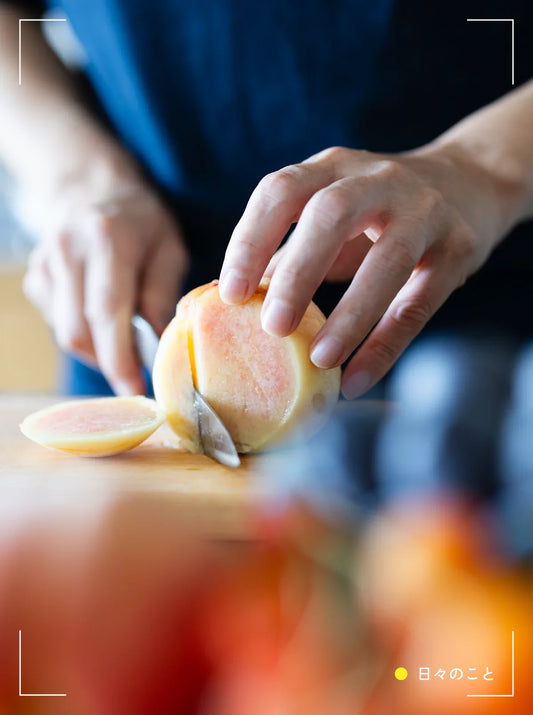
No one asked, but I'm going to share Jiro's fruit rankings anyway.
Since I'm doing it, I'll divide it into childhood, adolescence, and adulthood.
Childhood Fruit Rankings
1st Place: Pear
2nd Place: Peach
3rd Place: Strawberry
During childhood, pear was overwhelmingly number one.
My autumn delight wasn't the sports festival or my birthday; it was when pears came into season.
Adolescence Fruit Rankings
1st Place: Pear
2nd Place: Mango
3rd Place: Peach
Even in adolescence, pear remained the undisputed number one, but a new star,
mango, suddenly entered the rankings.
I didn't even know it existed in childhood, but then it suddenly appeared before my eyes,
and there was a time when I was captivated by how surprisingly delicious mangoes were.
Adulthood Fruit Rankings
1st Place: Strawberry
2nd Place: Peach
3rd Place: Mandarin Orange
In adulthood, which is my current ranking,
strawberry has become number one.
As I've gotten older, my interest in pears has faded,
and strawberries, being easy to eat, easy to buy, and delicious,
have become my favorite fruit.
As I was writing this, I felt like I had written about this before,
so I looked back at my past daily entries
and found that I had written about a similar fruit ranking!
How much do I love fruit?!
No one asked, but I'm going to share Jiro's fruit rankings anyway.
Since I'm doing it, I'll divide it into childhood, adolescence, and adulthood.
Childhood Fruit Rankings
1st Place: Pear
2nd Place: Peach
3rd Place: Strawberry
During childhood, pear was overwhelmingly number one.
My autumn delight wasn't the sports festival or my birthday; it was when pears came into season.
Adolescence Fruit Rankings
1st Place: Pear
2nd Place: Mango
3rd Place: Peach
Even in adolescence, pear remained the undisputed number one, but a new star,
mango, suddenly entered the rankings.
I didn't even know it existed in childhood, but then it suddenly appeared before my eyes,
and there was a time when I was captivated by how surprisingly delicious mangoes were.
Adulthood Fruit Rankings
1st Place: Strawberry
2nd Place: Peach
3rd Place: Mandarin Orange
In adulthood, which is my current ranking,
strawberry has become number one.
As I've gotten older, my interest in pears has faded,
and strawberries, being easy to eat, easy to buy, and delicious,
have become my favorite fruit.
As I was writing this, I felt like I had written about this before,
so I looked back at my past daily entries
and found that I had written about a similar fruit ranking!
How much do I love fruit?!
Fri, 6.27 | The order changes the outcome
Fri, 6.27 | The order changes the outcome
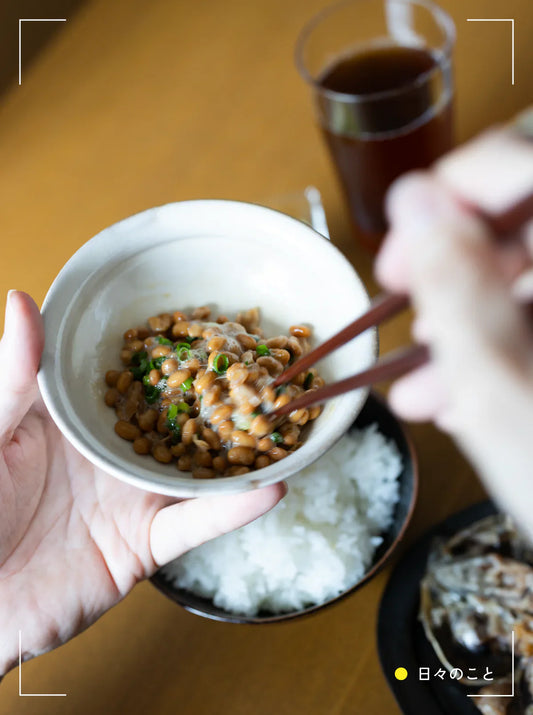
My former senior colleague used to say, "Natto tastes better if you mix it before adding the sauce." I didn't believe him at all. I thought whether you mix it first and then add the sauce, or add the sauce first and then mix, the result would be the same, so there wouldn't be any difference in taste.
Later, watching TV, I heard on an information program, "Natto tastes better if you mix it before adding the sauce, as it makes the umami more noticeable." I'm sorry for not believing you, Senior. Since I didn't believe it, I never even tried it.
In hindsight, it makes sense. The order of cooking steps can't just be random; it's quite normal for the order of adding ingredients to change the outcome.
Order. It's important.
My former senior colleague used to say, "Natto tastes better if you mix it before adding the sauce." I didn't believe him at all. I thought whether you mix it first and then add the sauce, or add the sauce first and then mix, the result would be the same, so there wouldn't be any difference in taste.
Later, watching TV, I heard on an information program, "Natto tastes better if you mix it before adding the sauce, as it makes the umami more noticeable." I'm sorry for not believing you, Senior. Since I didn't believe it, I never even tried it.
In hindsight, it makes sense. The order of cooking steps can't just be random; it's quite normal for the order of adding ingredients to change the outcome.
Order. It's important.
6.26 Thu. | Hot

6.26 Thu. | Hot
Suddenly it's summer, isn't it? I feel like there used to be a little more of something between spring and summer. I wonder if it just disappeared.
There are two signs for me that tell me, "Ah, it's summer." One is when I no longer feel like taking a bath. Suddenly, the thought comes, "Oh, I don't need to take a bath today." When that happens, it's summer.
The other sign is when I pick up Ibonoito somen noodles at the supermarket. In summer, Ibonoito appears at the end of the supermarket shelf, and I can't help but pick it up. If I pick it up, that means it's summer.
The end of the supermarket shelf, if illustrated, is here:
|--------------------| ← Here
Another hot summer has arrived, hasn't it? Let's be careful not to catch a cold!
Suddenly it's summer, isn't it? I feel like there used to be a little more of something between spring and summer. I wonder if it just disappeared.
There are two signs for me that tell me, "Ah, it's summer." One is when I no longer feel like taking a bath. Suddenly, the thought comes, "Oh, I don't need to take a bath today." When that happens, it's summer.
The other sign is when I pick up Ibonoito somen noodles at the supermarket. In summer, Ibonoito appears at the end of the supermarket shelf, and I can't help but pick it up. If I pick it up, that means it's summer.
The end of the supermarket shelf, if illustrated, is here:
|--------------------| ← Here
Another hot summer has arrived, hasn't it? Let's be careful not to catch a cold!
Wednesday, 25 June | Celebrations and Thank Yous

Wednesday, 25 June | Celebrations and Thank Yous
Yesterday, my YouTube channel reached 10,000 subscribers.
When I imagine that 10,000 people have pressed the subscribe button, it really makes me realize what an amazing and trulyありがたいこと (thankful/grateful thing) it is.
It was a number I had set as a goal, so I'm very happy to have achieved it, and the fact that it's the result of building things up one step at a time has also given me confidence.
Considering that I started YouTube last November with just two subscribers—my own personal account and my videographer/editor Konegi's—it's quite moving to realize that I've come quite a long way without even noticing, just by walking one step at a time.
Once again, thank you very much to everyone who watches my YouTube videos, visits the kikkake website, and places orders. I will continue to create content that you can enjoy, so I hope you will keep watching.
When I started YouTube, I said, "If I'm going to start, I want a Silver Play Button!" (a commemorative award given when a channel reaches 100,000 subscribers). Since I've come this far, I think I'll aim for that next, moving forward one step at a time.
For now, yay!!!!!
Yesterday, my YouTube channel reached 10,000 subscribers.
When I imagine that 10,000 people have pressed the subscribe button, it really makes me realize what an amazing and trulyありがたいこと (thankful/grateful thing) it is.
It was a number I had set as a goal, so I'm very happy to have achieved it, and the fact that it's the result of building things up one step at a time has also given me confidence.
Considering that I started YouTube last November with just two subscribers—my own personal account and my videographer/editor Konegi's—it's quite moving to realize that I've come quite a long way without even noticing, just by walking one step at a time.
Once again, thank you very much to everyone who watches my YouTube videos, visits the kikkake website, and places orders. I will continue to create content that you can enjoy, so I hope you will keep watching.
When I started YouTube, I said, "If I'm going to start, I want a Silver Play Button!" (a commemorative award given when a channel reaches 100,000 subscribers). Since I've come this far, I think I'll aim for that next, moving forward one step at a time.
For now, yay!!!!!