
商品の情報、ストアのお知らせをお伝えしていきます。
日報
8.7 Thu. | Prototype
8.7 Thu. | Prototype
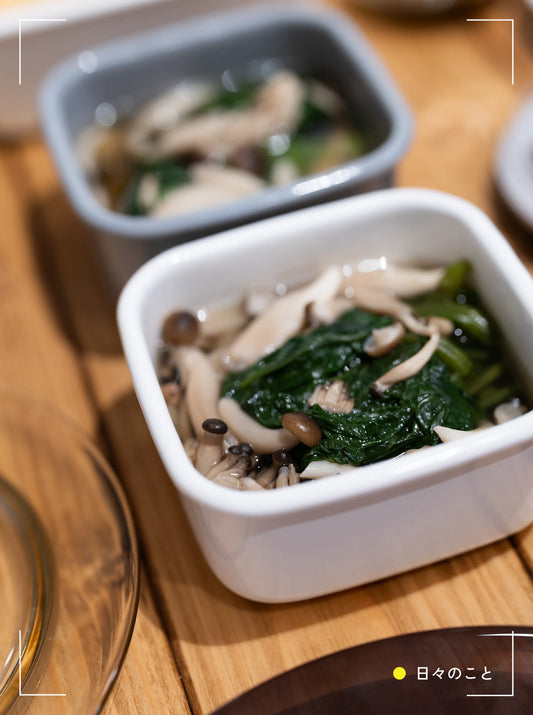
When shooting food for YouTube or sales pages,
I first discuss with Konigi, who is in charge of shooting, what kind of dish we'll be making.
If it's a dish we make often, we might not make it in advance, but usually we do a trial run beforehand.
We try out various things like ingredients, cooking utensils, steps, seasoning, tableware, plating,
how to eat it, angles, lighting, and scenes to make it delicious and look delicious.
I realized that this is actually the most enjoyable part.
Of course, during the actual shoot,
I focus intensely to make sure the food looks delicious and beautiful.
In contrast, during the trial runs, I cook a bit more
relaxed, freely, and boldly, trying different things without
fear of change.
I think this is when the most ideas come to me and I feel a sense of evolution, which makes it enjoyable.
I suddenly thought this while doing a trial run.
Well, there are many times when even after a trial run, things don't quite click.
It's very satisfying when a dish I made casually turns out to be surprisingly delicious and hits the spot.
When shooting food for YouTube or sales pages,
I first discuss with Konigi, who is in charge of shooting, what kind of dish we'll be making.
If it's a dish we make often, we might not make it in advance, but usually we do a trial run beforehand.
We try out various things like ingredients, cooking utensils, steps, seasoning, tableware, plating,
how to eat it, angles, lighting, and scenes to make it delicious and look delicious.
I realized that this is actually the most enjoyable part.
Of course, during the actual shoot,
I focus intensely to make sure the food looks delicious and beautiful.
In contrast, during the trial runs, I cook a bit more
relaxed, freely, and boldly, trying different things without
fear of change.
I think this is when the most ideas come to me and I feel a sense of evolution, which makes it enjoyable.
I suddenly thought this while doing a trial run.
Well, there are many times when even after a trial run, things don't quite click.
It's very satisfying when a dish I made casually turns out to be surprisingly delicious and hits the spot.
August 6, Wednesday | I want to lose weight
August 6, Wednesday | I want to lose weight
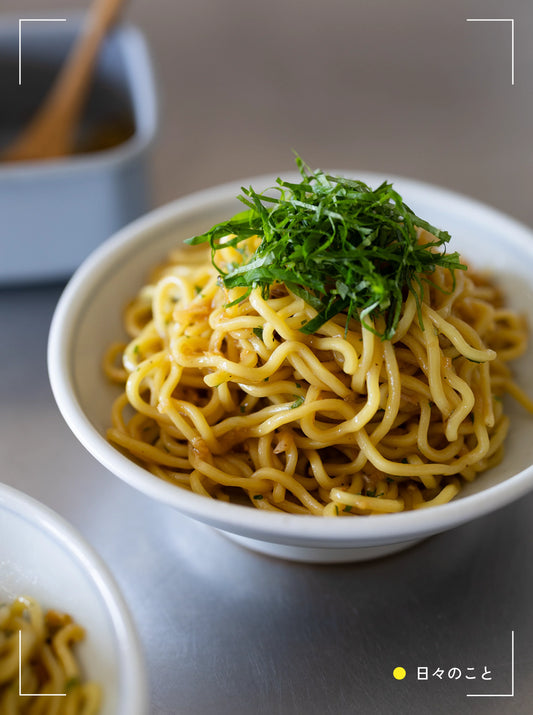
I'm not losing weight.
I thought I would.
I knew it was getting harder to lose weight the older I got, but still.
Before I started kikkake, I was a salaryman with a desk job,
I ate ramen for lunch almost every day, and I often ate before bed.
Now, including YouTube shoots and product shoots, I cook almost every day and eat what I make.
I hardly ever eat out, and I don't cook late at night, so I eat dinner earlier than before.
So, I had high hopes that maybe something would happen, but
there's absolutely no change.
I imagined bragging here, "I lost weight after I started cooking for myself!" but
it doesn't seem like that's going to happen anytime soon.
I wonder why.
All I'm doing is making and eating as much of the food I want to eat as I want.
I'm not losing weight.
I thought I would.
I knew it was getting harder to lose weight the older I got, but still.
Before I started kikkake, I was a salaryman with a desk job,
I ate ramen for lunch almost every day, and I often ate before bed.
Now, including YouTube shoots and product shoots, I cook almost every day and eat what I make.
I hardly ever eat out, and I don't cook late at night, so I eat dinner earlier than before.
So, I had high hopes that maybe something would happen, but
there's absolutely no change.
I imagined bragging here, "I lost weight after I started cooking for myself!" but
it doesn't seem like that's going to happen anytime soon.
I wonder why.
All I'm doing is making and eating as much of the food I want to eat as I want.
8.5 Tue. | Homepage Renewal
8.5 Tue. | Homepage Renewal
Three months have passed since the kikkake online store opened. Thank you very much to everyone who has viewed and placed orders.
Over these past three months, I've been busy cooking and taking photos. As this is my first online store, I've noticed many things since its launch that I hadn't anticipated, and there were many instances where I thought, "We should have done this too."
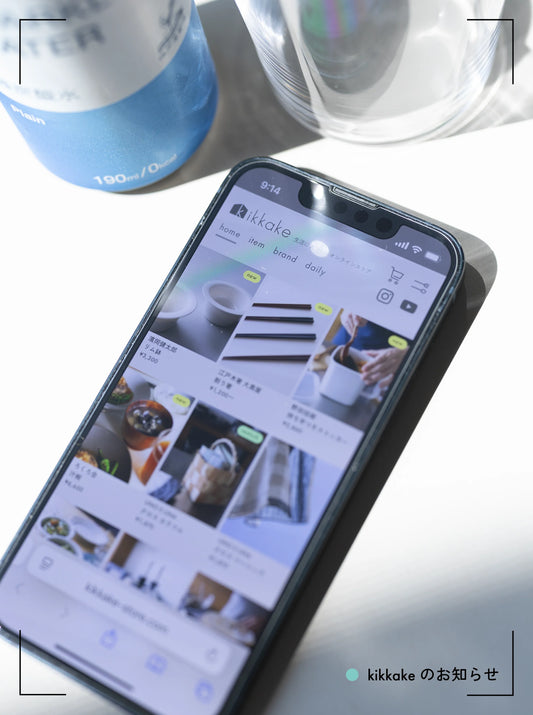
So, I decided to do a minor renewal and change the look of the top page. It's already changed, so I assume you've seen it, but I've changed product images from squares to vertical rectangles, added icons like [new] and [restock], and included the latest YouTube and daily links, among other small changes. I hope these adjustments have made the site easier to browse.
As the site has just launched, I hope to continue evolving it, and I would be delighted if you enjoy browsing.
If you have any specific requests for elements you'd like to see, or for cooking and product photos, please feel free to send your feedback to info@kikkake-store.com.
Three months have passed since the kikkake online store opened. Thank you very much to everyone who has viewed and placed orders.
Over these past three months, I've been busy cooking and taking photos. As this is my first online store, I've noticed many things since its launch that I hadn't anticipated, and there were many instances where I thought, "We should have done this too."
So, I decided to do a minor renewal and change the look of the top page. It's already changed, so I assume you've seen it, but I've changed product images from squares to vertical rectangles, added icons like [new] and [restock], and included the latest YouTube and daily links, among other small changes. I hope these adjustments have made the site easier to browse.
As the site has just launched, I hope to continue evolving it, and I would be delighted if you enjoy browsing.
If you have any specific requests for elements you'd like to see, or for cooking and product photos, please feel free to send your feedback to info@kikkake-store.com.
8.4 Mon. | Hospitality Dishes
8.4 Mon. | Hospitality Dishes
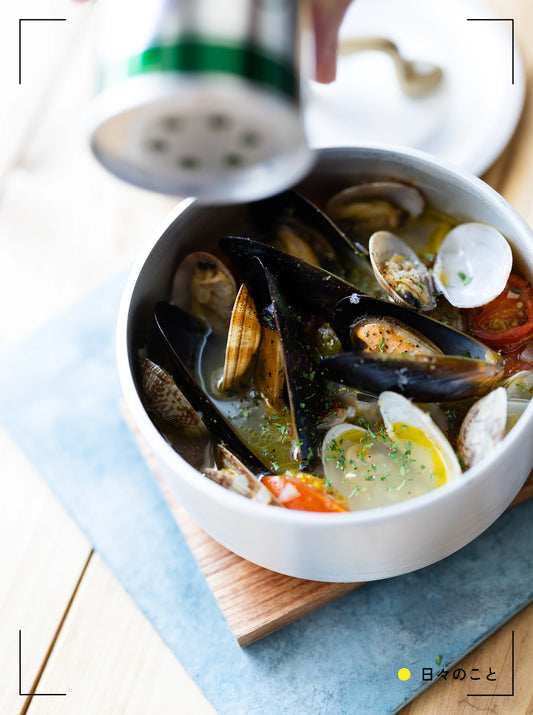
When guests come over, you'd naturally think that the best hospitality dish to serve is one you're always making and are best at.
However, in reality, I feel like I often end up making a challenging dish I've never prepared before.
After thinking about why, it seems the trap lies in the word "special."
The dishes I always make are delicious and my favorites, but for me, they're just "normal," everyday meals. I wonder if I end up thinking they're not suitable for a "special" occasion.
If we consider everyday cooking as practice and hospitality dishes as a game, it's impossible to succeed in a game by suddenly trying a technique you've never practiced.
Even though I know this, I still diligently prepare broth from scratch early in the morning because guests are coming, only for it to turn into a flavor I've never tasted before, and I end up thinking, "Huh?"
When it comes to a "game," you just can't help but put your all into it, can you?
When guests come over, you'd naturally think that the best hospitality dish to serve is one you're always making and are best at.
However, in reality, I feel like I often end up making a challenging dish I've never prepared before.
After thinking about why, it seems the trap lies in the word "special."
The dishes I always make are delicious and my favorites, but for me, they're just "normal," everyday meals. I wonder if I end up thinking they're not suitable for a "special" occasion.
If we consider everyday cooking as practice and hospitality dishes as a game, it's impossible to succeed in a game by suddenly trying a technique you've never practiced.
Even though I know this, I still diligently prepare broth from scratch early in the morning because guests are coming, only for it to turn into a flavor I've never tasted before, and I end up thinking, "Huh?"
When it comes to a "game," you just can't help but put your all into it, can you?
8.1 Fri. | Frozen Gyoza
8.1 Fri. | Frozen Gyoza
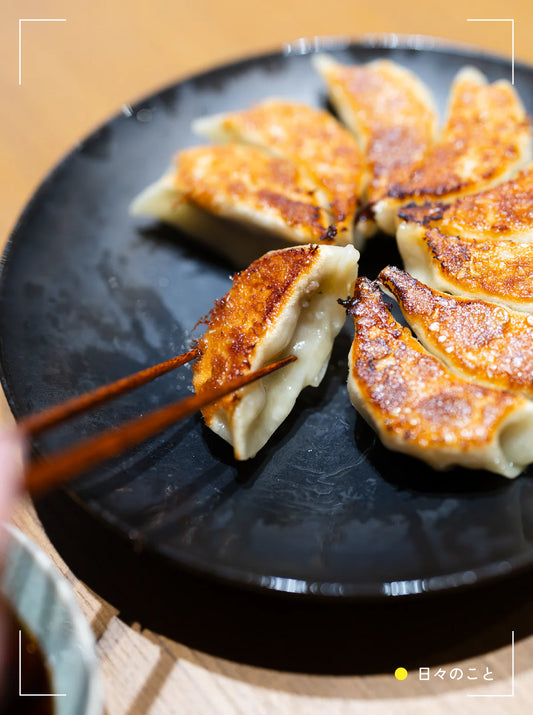
The quality of frozen gyoza is too high. Starting with AJINOMOTO's frozen gyoza, there are many different kinds of frozen gyoza on the market now, and they are all incredibly high quality and delicious. And they're cheap! Too cheap.
I think I make handmade gyoza often, but if you add up the necessary ingredients like ground pork, gyoza wrappers, and vegetables, the cost ends up being almost the same. So, when considering the effort involved in making them, I feel that frozen gyoza are more cost-effective.
When thinking about the advantages of handmade gyoza, I used to think it was just being able to customize the filling to my liking. However, a new appeal of handmade gyoza has emerged.
The gyoza I made in the recent YouTube series "20-Minute Evening Snacks" used gyoza wrappers sold at a nearby noodle shop, and these wrappers were surprisingly thick. Since I had only ever used gyoza wrappers sold in supermarkets, I didn't have much choice regarding thickness and hadn't really paid attention to it, but these thick gyoza wrappers were quite good. As expected from a noodle shop's wrappers, the wrappers themselves had a chewy texture and fresh flavor different from regular gyoza wrappers. It was a new sensation to eat gyoza while being more conscious of the wrapper's texture.
Frozen gyoza when I'm short on time, and handmade gyoza on weekends when I have more time. I think it's fun to have more options.
The quality of frozen gyoza is too high. Starting with AJINOMOTO's frozen gyoza, there are many different kinds of frozen gyoza on the market now, and they are all incredibly high quality and delicious. And they're cheap! Too cheap.
I think I make handmade gyoza often, but if you add up the necessary ingredients like ground pork, gyoza wrappers, and vegetables, the cost ends up being almost the same. So, when considering the effort involved in making them, I feel that frozen gyoza are more cost-effective.
When thinking about the advantages of handmade gyoza, I used to think it was just being able to customize the filling to my liking. However, a new appeal of handmade gyoza has emerged.
The gyoza I made in the recent YouTube series "20-Minute Evening Snacks" used gyoza wrappers sold at a nearby noodle shop, and these wrappers were surprisingly thick. Since I had only ever used gyoza wrappers sold in supermarkets, I didn't have much choice regarding thickness and hadn't really paid attention to it, but these thick gyoza wrappers were quite good. As expected from a noodle shop's wrappers, the wrappers themselves had a chewy texture and fresh flavor different from regular gyoza wrappers. It was a new sensation to eat gyoza while being more conscious of the wrapper's texture.
Frozen gyoza when I'm short on time, and handmade gyoza on weekends when I have more time. I think it's fun to have more options.
Thursday, July 31 | Durum Wheat Semolina
Thursday, July 31 | Durum Wheat Semolina
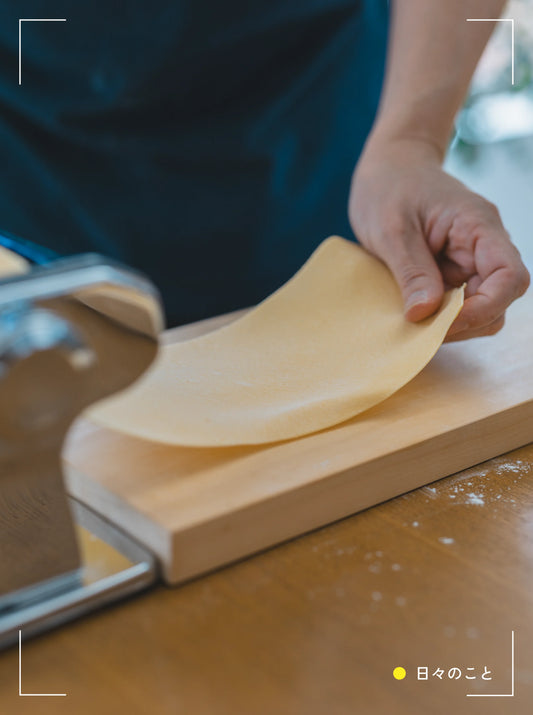
I got a pasta maker, so I tried making pasta from scratch. Making noodles from flour was a lot of fun. "I kneaded flour and it turned into noodles!" It's obvious when you think about it, but the surprise and emotion of "I can't believe flour actually turns into noodles!" was really enjoyable.
I'll be showing how I made it in a YouTube video that will be released this Saturday, so I'd be happy if you could watch it.
This time, to make pasta, I bought "semolina flour." I'd been curious about it for a while, but if you look at the ingredients list on the back of dried pasta, they all say the same thing:
Ingredients: Durum wheat semolina
I have no idea what that means. I understand it's wheat, but beyond that, I wondered if it was a place of origin, a type, or a processing method.
Title: Demon Kakka's Serenade
With this, I'd know it was a new love song from Seikima-II, but with "durum wheat semolina," I have no idea what's what.
Since it was a good opportunity, I looked it up and found that "durum" is a type of wheat, and "semolina" means coarsely ground flour. Durum wheat is harder and more yellow than other wheats, and it's suitable for pasta because it retains its firmness and shape even after boiling. I see! I learned something new!
I thought maybe it would be clearer if I changed the wording, and after thinking about it, I wonder if this is easier to understand?
Ingredients: Wheat "durum" semolina method
It doesn't really change much, does it?
I got a pasta maker, so I tried making pasta from scratch. Making noodles from flour was a lot of fun. "I kneaded flour and it turned into noodles!" It's obvious when you think about it, but the surprise and emotion of "I can't believe flour actually turns into noodles!" was really enjoyable.
I'll be showing how I made it in a YouTube video that will be released this Saturday, so I'd be happy if you could watch it.
This time, to make pasta, I bought "semolina flour." I'd been curious about it for a while, but if you look at the ingredients list on the back of dried pasta, they all say the same thing:
Ingredients: Durum wheat semolina
I have no idea what that means. I understand it's wheat, but beyond that, I wondered if it was a place of origin, a type, or a processing method.
Title: Demon Kakka's Serenade
With this, I'd know it was a new love song from Seikima-II, but with "durum wheat semolina," I have no idea what's what.
Since it was a good opportunity, I looked it up and found that "durum" is a type of wheat, and "semolina" means coarsely ground flour. Durum wheat is harder and more yellow than other wheats, and it's suitable for pasta because it retains its firmness and shape even after boiling. I see! I learned something new!
I thought maybe it would be clearer if I changed the wording, and after thinking about it, I wonder if this is easier to understand?
Ingredients: Wheat "durum" semolina method
It doesn't really change much, does it?